

















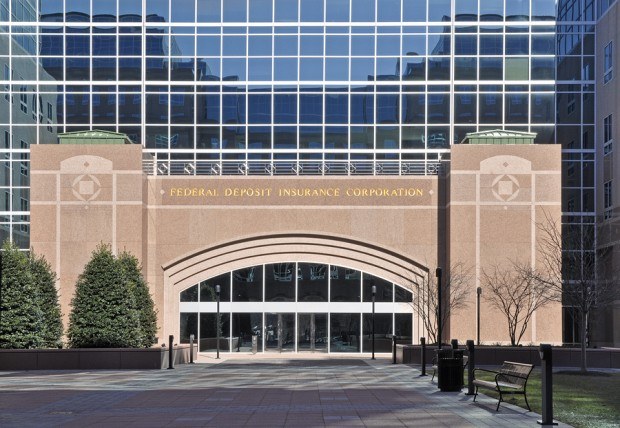
The Federal Deposit Insurance Corp. board will vote on rules defining whether a non-bank company is engaged in financial activity to an extent that would subject it to the agency’s liquidation in the event of its failure.
The definition, if approved today, would echo a Federal Reserve rule adopted in April. The Dodd-Frank Act required the agencies to define the threshold for firms covered by the FDIC’s authority to take apart systemically risky non-bank firms when they fail and the Financial Stability Oversight Council’s authority to decide such a firm warrants additional oversight.
The FDIC’s initial proposal in March 2011 detailed how regulators may determine the threshold for companies falling within the agency’s authority, which Dodd-Frank outlined as firms with more than 85 percent of their revenue or assets linked to finance. The proposal was written to parallel the Fed definition — effective last month — of non-bank firms that could be evaluated for potential risks to the financial system.
The oversight council, established by Dodd-Frank, met yesterday to label some non-bank companies (AIG, Prudential, GE Capital) as systemically important, a move that puts them under heightened Fed supervision.
 California Tops List of Homes Facing Extreme Wildfire Risk, Mitigation Cuts Risk up to 70%
  Why Your Boss Matters More Than Remote or Hybrid Work When It Comes to Burnout and Job Satisfaction
  Highway Safety Agency Plans to Revise Outdated Vehicle Lighting Rules
  Amazon Cargo Plane Pilots Weren’t Warned About Wind Before Miami Crash: NTSB