
















This Partner Perspective is part of a series brought to you by Cotality.
Property insurers today must look at individual property resilience, not just hazard risks, to best protect portfolios.
For much of insurance history, P&C carriers focused on general risk analysis—anticipating potential damages by looking at neighborhood averages: if a fire strikes in a zip code, it was all about understanding what the average loss cost was in that concentrated area over the last year or so.
And for a long time, that seemed like enough.
But modern dynamics have changed the equation. Homeowners are staying in their properties longer, either embarking on DIY renovations or letting outdated building systems age. Both moves impact structural resilience, and not consistently. At the same time, reconstruction cost values (RCV) have skyrocketed and now vary wildly even within the exact same neighborhoods. Over the last decade, it has become abundantly clear that historical regional averages fail to capture actual property risk.
Adequate risk analysis today demands evaluating a structure’s likely response to both natural catastrophes and everyday non-weather events.
Modern portfolio protection requires more than just trying to predict changing natural hazard behavior. Carriers need tools that do more—tools that analyze both the external hazard and a property’s physical response to everyday disasters.
While the headlines focus on historic wildfires and major flooding events, everyday water and fire mishaps can be just as damaging to your loss ratio if a home isn’t built to withstand them. Assessing catastrophe risk is critical, but the ultimate defense for your portfolio is understanding how individual structures respond to these constant, inevitable threats.
Why resilience analysis is a refuge for your portfolio
Conquering what is within your control gives you the foundation to be able to overcome what is out of your control.
There is a certain level of natural catastrophe analysis that will always remain somewhat abstract. Even though we can understand what can happen, no one can predict certainties.
The most certain thing insurers can do is model worst-case scenarios against the concrete—the physical resilience of the structure before us.
The fires that do the most damage to your loss ratio aren’t always wild, and the worst water damage doesn’t always come as a result of natural flooding or precipitation.
While mega-storms and raging wildfires are important to anticipate and prepare for, localized, non-weather disasters consistently chip away at a carrier’s loss ratio.
Consider the numbers:
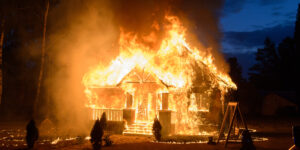
- The fire reality: Standard home fires occur roughly five times more often than distinct wildfire incidents nationwide. On average, a structural home fire is reported every 90 to 96 seconds in the United States (according to the 2025 National Fire Protection Association [NFPA] Annual Fire Loss Report). A single faulty kitchen appliance or an outdated electrical panel can cause fire and water damage year-round, completely independent of the weather.
- The water reality: The worst water damage often doesn’t start on the roof from heavy precipitation; it starts inside the walls. A slow, steady, pressurized leak from a compromised pipe or a failed appliance hose can flood an entire home from the inside out while the owners are away for the weekend, resulting in catastrophic mold and structural rot.
A deep understanding of everyday property disasters, paired with granular resiliency insights, delivers the greatest day-to-day impact on your underwriting portfolio.
Cotality™ brings resiliency to your risk analysis equation
Cotality’s Fire Resiliency™ and Water Resiliency™ scores are built to give you improved property-level clarity where traditional models leave a blank space. These scores do more because they look at all the factors of non-weather fire and water, including how a property will fare. They empower underwriters to assess risk more accurately and help claims teams proactively identify properties primed for catastrophic non-weather fire and water losses:
Fire Resiliency: A 1-100 score to predict house fire damage
- Material structural vulnerability: Evaluates the specific building materials, roof types, and architectural features that dictate whether a localized fire remains a minor incident or becomes a total loss.
- Granular protection data: Factors in local fire response capabilities, nearest station distance, and water availability.
Water Resiliency: A 1-100 score to predict non-weather water damage
- Systemic plumbing vulnerabilities: Analyzes the unseen mechanics of a property, including the age of the structure, historical piping materials, heating and cooling type, and appliance layout to predict internal pipe bursts and slow, undetected leaks.
- Spatial breakdown: Factors in vertical exposure (stories) and high-use water sources (kitchens and bathrooms) to calculate the potential financial severity of a loss.
These scores also go the extra mile because Cotality is continually expanding these scores to incorporate deeper underlying property data, aerial imagery, building permits, and updated local regulatory details.
These resiliency scoring solutions are already actively protecting portfolios and shifting underwriting workflows nationwide. These predictive models are backed by a massive national database containing over 19 million+ earned exposures, 227,000+ claims, and $2.4 billion in losses, ensuring more highly validated baselines.
A resiliency score does more than standard risk tools
You can call it grabbing the low-hanging fruit or covering your bases.
Developing a risk analysis strategy without evaluating resilience against everyday disasters is akin to safeguarding a room by removing knives but not guns.
At a time when length of home residency is longer, and natural catastrophes are increasingly difficult to predict, it is essential to contain what we can control.
Resiliency scores are more necessary today than they have ever been, and they have immediate impact on an insurer’s portfolio.
Contact us today to see what resiliency scores can do for your portfolio.
© 2026 Cotality. All rights reserved. While all of the content and information is believed to be accurate, the content and information is provided by Cotality “as is” for informational and educational purposes only with no guarantee, representation, or warranty, express or implied, of any kind including but not limited to as to the merchantability, non-infringement of intellectual property rights, completeness, accuracy, applicability, or fitness, in connection with the content or information or product and Cotality assumes no responsibility or liability whatsoever for the content or information or product or any reliance thereon. Cotality™, the Cotality logo, Intelligence beyond bounds™, Fire Resiliency™, and Water Resiliency™ are the trademarks of CoreLogic, Inc. d/b/a Cotality or its affiliates or subsidiaries. All other trademarks are the property of their respective owners.
 Oversight, Safety Questions Raised in Deadly Brooklyn Building Collapse
 Xceedance Says for Insurers, AI Advantage Is in Orchestration
 New Florida Property Tax Cut Could Impact Insurance Rates
 Trusting a Broker Facility