
















Socotra announced the launch of Socotra Configuration Assistant, a native product experience that turns business requirements into a working product in Socotra.
Users can describe a product in natural language, upload a filing, or repurpose an existing Socotra configuration. Configuration Assistant then helps them build and refine the product, inspect the configuration, validate the result, and deploy it to a new or existing tenant for testing.
Socotra launched Agentic Configuration in 2025 as a service from its Implementation team. The company is now bringing Agentic Configuration fully documented and natively available in Socotra Configuration Studio. No external AI assistant or separate development environment is required.
Configuration Assistant is designed for both business and technical users. Business users can review the product structure and business logic without reading code. Technical users can inspect the underlying configuration and plugin code when they need more detail. The entire experience is built on Socotra’s flexible data model, open APIs, and token-efficient documentation.
Socotra Configuration Assistant is available to Socotra customers and select partners.
***
dClimate announced a collaboration with Amazon Web Services to bring TESSERA, the global geospatial AI foundation model behind EarthOS and its land intelligence platform, to worldwide coverage and make its data available to everyone.
Through the Amazon Sustainability Data Initiative (ASDI)and the AWS Open Data Sponsorship program, AWS is providing compute credits and Open Data hosting to complete TESSERA’s historical global embeddings and host the resulting analysis-ready data for open public access.
TESSERA was developed under Dr. Clement Atzberger, chief scientist at Arbol Inc. — an AI-native insurance and climate risk company — in collaboration with researchers at the University of Cambridge. Arbol has served as an open source collaborator throughout TESSERA’s development, contributing applied research, engineering support, and real-world validation drawn from its climate risk underwriting, and backing the model’s release under an open license as a shared scientific resource.
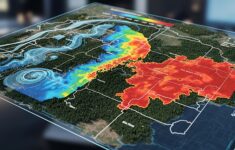
TESSERA converts raw data from Europe’s Sentinel-1 (radar) and Sentinel-2 (optical) missions into compact, analysis-ready embeddings – a distilled fingerprint that captures how every 10-meter patch of land on Earth changes over the course of a year. The result is a continuously updated, machine-readable map of the planet’s surface. A researcher, conservationist, or developer can download 128-dimension data layers and immediately begin asking questions about a forest, a watershed, a farm, or an entire continent.
TESSERA is already in applied use by Arbol to develop climate insurance products for underserved regions where traditional insurers are retreating and where limited data availability and modeling capabilities have made these risks difficult or impossible to underwrite. By converting years of satellite observation into consistent, analysis-ready signals for every 10-meter patch of land, TESSERA aims to help underwriters structure and price coverage for perils including drought, flood, wildfire, and crop failure in markets that have historically gone unprotected. Making the underlying data openly available is expected to extend such applications worldwide.
Unlike proprietary alternatives, TESSERA is designed to be open by default. Its code and embeddings are released under an open license, with a public registry supporting reproducibility and independent verification. It is intended to function as a public utility for understanding the planet rather than a closed product.
***
Patra, which operates one of the insurance industry’s production-grade agentic AI platforms, has launched managed services to orchestrate workflows aligned to how agencies operate.
Patra is also an insurance distribution partner that carries errors and omissions coverage extending to its AI-delivered services.
Under Patra’s managed services, a single trigger sets a workflow in motion. Related operational tasks – from document retrieval through policy checking to delivery – are executed in sequence, quality checks run automatically in the platform, and the outcome is delivered as a finished product after review at key points by Patra’s insurance professionals. The client engages only for critical escalations or approvals.
The managed services workflow is post-bind processing, which includes orchestrated automation of document retrieval, indexing, policy checking, agency management system data updates, policy delivery, and processing of renewal certificates of insurance. Patra plans to expand to additional workflows over time.
Patra processes tens of millions of insurance transactions annually for brokers, agencies, MGAs, and wholesalers. Managed services apply Patra’s operational scale, AI fluency, and two decades of insurance specific expertise in property/casualty and employee benefits to deliver outcomes through a finished workflow that is AI-driven, reviewed by experts, and run to each client’s agreed procedures.
Sources: Socotra, dClimate, Patra
 Federal Bill Seeks to Reduce Work Week to 32 Hours
  Most Americans Think AI Is Developing Too Fast: Poll
  Viewpoint: The ‘Unbundled’ Insurer Emerges in Age of AI as Value Chain Fragments
  Lyft to Pay $272M to Settle California Rideshare Drivers’ Wage Theft Lawsuit