
















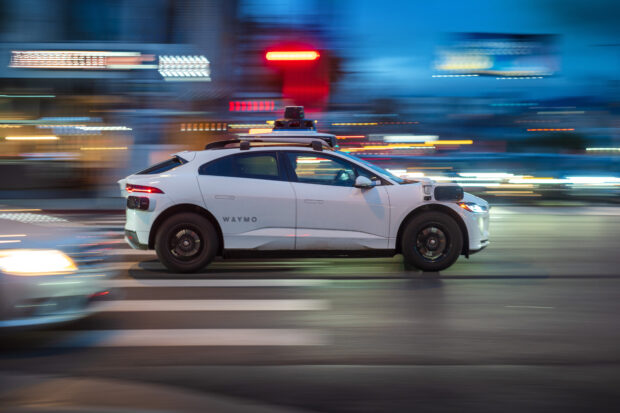
Researchers have developed a new approach to boosting self-driving vehicle algorithms that could significantly reduce the time and cost required to prepare automated vehicles for real-world deployment, according to the University of Michigan.
Rather than relying on the vast amounts of routine driving data typically used to train autonomous systems, the method focuses on “near-miss” scenarios—rare but safety-critical events that challenge vehicle decision-making.
By generating and prioritizing the high-value training situations in simulation, the framework helps autonomous driving systems learn more efficiently while improving their ability to respond to complex traffic conditions, the researchers said.
The team tested their approach, incorporating both safety-critical and near-miss scenarios, achieving a 90% improvement in the vehicle’s safety performance.
The work builds on the University of Michigan’s testing and validation of connected and automated vehicles, including its use of artificial intelligence (AI) to reduce testing miles required by 99.9%.
The research was funded in part by the National Science Foundation and the Center for Connected and Automated Transportation at U-M, and published earlier this year in Nature Communications.
 Companies, Governments Fight Hacking Attempts in Rush to Patch PHP Flaws
  Viewpoint: Pricing Wildfire Risk Is Not the Same as Reducing It
  AAA Survey Reveals Disconnect in Drivers’ Obeying ‘Slow Down, Move Over’ Laws
  Building a Glass Box Not a Black Box at Elara Spatial