















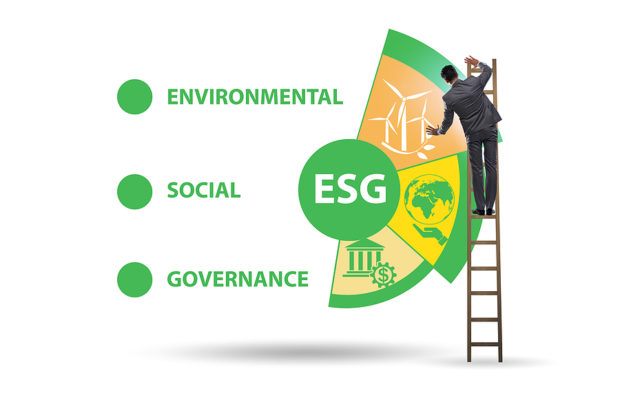
A Texas judge’s move to strike down a state law blacklisting “woke” financial firms, including BlackRock and HSBC, that used environmental, social or governance factors in investment decisions will likely drive a broader push to repeal so-called “anti-ESG” laws in other states, analysts said.
Texas lawmakers passed the Energy Discrimination Elimination Act in 2021, requiring state agencies and local authorities to break ties with and divest the shares of companies that refused to invest in some oil and gas companies, targeting the likes of BNP Paribas and Danske Bank are on its list. About 14 other states followed suit.
A federal judge in Texas said the law was unconstitutional last week, ruling that it violated First Amendment free-speech protections because it punished businesses for speaking about fossil fuels and associating with organizations that oppose fossil fuels. Texas said it would appeal the verdict.
It was “a home-court loss for Texas,” said K&L Gates attorney Lance Dial. “You would think if there’s any place they could make this stick, it’s Texas.”
ROADMAP FOR CHALLENGES
Bryan McGannon, managing director at the U.S. Sustainable Investment Forum, said the ruling provides a “roadmap” for challenges to similar laws passed in Oklahoma, Kentucky, West Virginia, Tennessee, and Utah, as well as other policies that target environmental, social, or corporate governance activities, or ESG.
“The ruling’s challenge to the faulty premise that climate or ESG considerations must be motivated by social or political purposes and ignores ‘ordinary business purpose’ clears the way to contest many anti-ESG laws,” he added.
Anti-ESG action has taken a variety of forms, including laws targeting diversity efforts and the use of lawsuits, including one from Texas and other states accusing investors of breaching antitrust laws when assessing corporate climate efforts.
Data from climate-policy advisory firm Pleiades Strategy, which tracks anti-ESG laws, shows there are currently 26 at various stages of development in U.S. states, including in Alaska, Georgia, Michigan, Minnesota, and Nebraska.
However, since it began tracking the bills in 2022, 391 had been killed off before making it into law.
WILDFIRES, FLOODS
Insurer Munich Re said in January that the cost of damages caused by natural disasters such as floods and wildfires, which scientists say are increasing in frequency and intensity because of climate change, totaled $224 billion in 2025.
Overall losses from wildfires in Los Angeles, the most expensive wildfire disaster to date, were around $53 billion, of which only $40 billion was insured, it added.
And some of the world’s biggest companies have cited issues linked to the world’s transition to a low-carbon economy, for example, patchy incentives and consumer demand for greener products, as a driver of results.
Stellantis last week became the latest in a string of automakers to write down the value of their EV investments, taking a $27-billion hit that sent its shares down 30%.
Given the need to assess such climate-related financial risks, laws like the one in Texas were merely designed to “politically punish” investors, said Ben Cushing, campaign director for sustainable finance at the Sierra Club.
Despite the laws’ “chilling effect,” Cushing said the Texas ruling should instead give investors confidence that managing climate-related risks was consistent with their fiduciary duty.
Frances Sawyer, founder of Pleiades Strategy, agreed: “It is yet another court ruling protecting the freedom to invest. This should be a strong signal that the overreach of anti-ESG laws has more bark than bite.”
(Reporting by Simon Jessop in London and by Ross Kerber in Boston. Editing by Dawn Kopecki and Nick Zieminski)
 Nearly 50,000 Cars Damaged by Floods This Year: CARFAX
  AI Models May Soon Self-Replicate Across Smart-Home Devices, Anthropic Warns
  The Latest Launches from Soteris, CLARA, Cozmo AI
  Why Your Boss Matters More Than Remote or Hybrid Work When It Comes to Burnout and Job Satisfaction