

















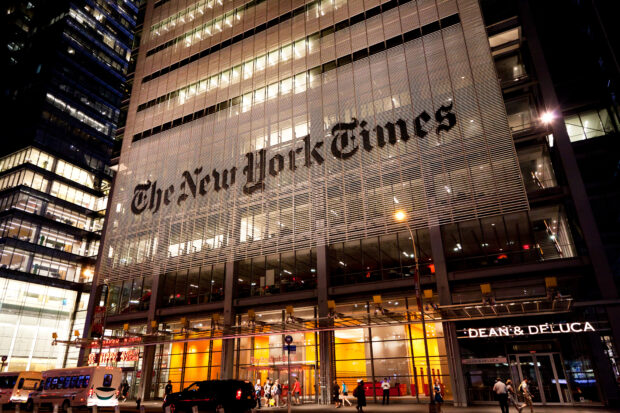
The New York Times filed a lawsuit against Perplexity AI on Friday, claiming that the artificial intelligence startup was copying, distributing and displaying millions of its articles without permission.
The startup has become a target of multiple legal disputes and faces similar accusations from a number of publishers as it tries to aggressively build market share in a hyper-competitive market for generative AI tools.
The Times said that Perplexity AI is also violating its trademarks under the Lanham Act, claiming the startup’s generative AI products create fabricated content, or “hallucinations,” and falsely attribute them to the newspaper by displaying them alongside its registered trademarks.
The newspaper also said that Perplexity’s business model relies on scraping and copying content, including paywalled material, to power its generative AI products.
The lawsuit is the latest salvo in a bitter ongoing battle between publishers and tech companies over the use of copyrighted content without authorization to build and operate their AI systems.
In October, social media company Reddit sued Perplexity in New York federal court, accusing it and three other companies of unlawfully scraping its data to train Perplexity’s AI-based search engine.
San Francisco-based Perplexity is also facing a lawsuit from media baron Rupert Murdoch’s Dow Jones and the New York Post.
Perplexity did not immediately respond to a Reuters request for comment.
(Reporting by Jaspreet Singh in Bengaluru; Editing by Arun Koyyur and Anil D’Silva)
 Edison Utility Shares Drop Due to Willful Misconduct Allegations in Eaton Fire Case
  Teen’s Death Prompts Plan to Ban New York Central Park’s Horse-drawn Carriages
  When Builder’s Risk Coverage Doesn’t Reach the Finish Line
  Arctic Sea Ice Continues to Shrink at a Rapid Pace: Study