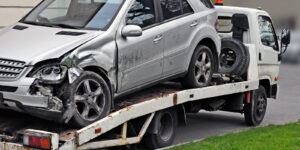

















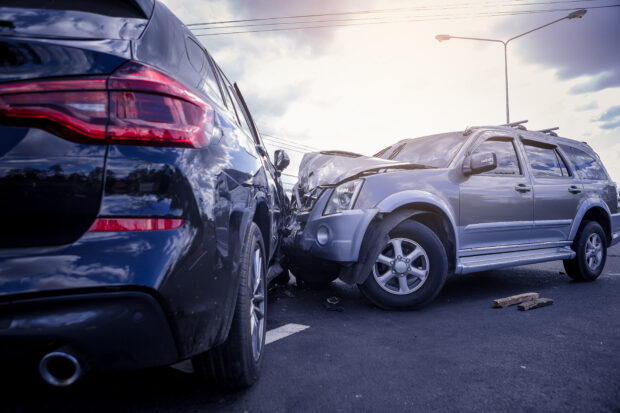
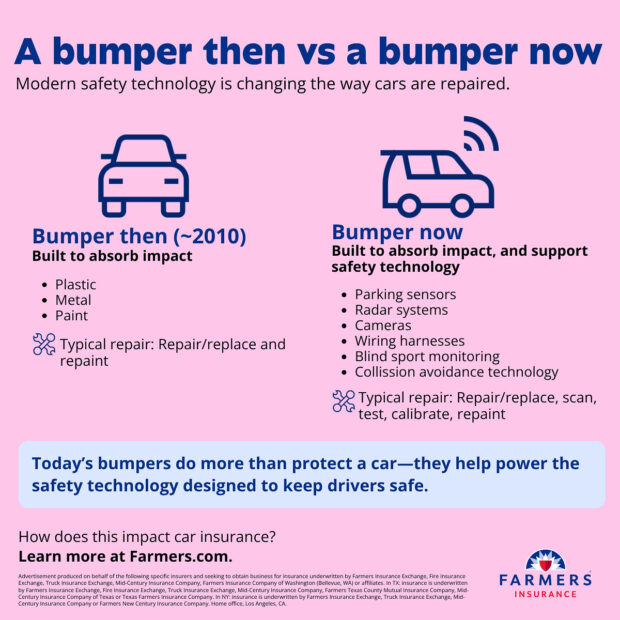
High-tech cars of today will likely take longer and be more expensive to repair, according to a recently released customer education campaign by Farmers Insurance.
The advanced technology built into windshields, bumpers and mirrors are part of what’s known as Advanced Driver Assistance Systems, or ADAS.
When a car with ADAS is damaged, repairs may require special parts, computer checks and careful adjustments to keep safety features working properly, the California-based insurer said.
“Many drivers use these safety features every day, but they may not connect them to the cost of repairing a car after an accident,” said Michaela Rush, head of National Auto Physical Damage at Farmers®. “Features designed to help prevent collisions can also make repairs more complicated and costly. Understanding that connection can help consumers make informed decisions about their car insurance coverage.”
ADAS is the safety technology behind many driver alerts and cameras and can include several safety features drivers may already use or recognize, such as:
- Front and rear cameras
- Automatic emergency braking
- Blind spot monitoring
- Parking sensors
- Adaptive cruise control
- Alerts when a driver drifts out of their lane
- Front radar systems
Federal rules are making some ADAS safety features standard in new cars.
For example, federal requirements already mandate rear visibility technology, including rearview cameras, on new cars. In addition, the National Highway Traffic Safety Administration (NHTSA) has finalized a rule requiring Automatic Emergency Braking (AEB) to be standard on all new passenger vehicles by September 2029.
Repair costs can rise for many reasons, and advanced safety technology is just one factor that can make certain repairs more complex, Farmers said.
In the past, a damaged bumper or windshield often involved a relatively straightforward repair, but today, many vehicle components contain cameras, sensors and radar systems that help power safety features such as automatic emergency braking, blind spot monitoring and lane departure warnings.
As a result, repairs may involve more than replacing damaged parts. They can also include:
- Replacing technology components
- Diagnostic scans before and after repairs
- Testing vehicle safety systems
- Calibrating cameras, sensors or radar equipment
- Additional labor and specialized equipment
Depending on the vehicle and damage, repairs involving safety features may require extra checks, calibration or specialized work.

 Hawaii Likely Needs $1B in Disaster Recovery, Resilience Funds
  Insurance AI’s Next Test: Can Carriers Trust the Data?
  Monster Tsunami Sent Water 1,580 Feet Up an Alaskan Mountain
  AAA Survey Reveals Disconnect in Drivers’ Obeying ‘Slow Down, Move Over’ Laws