















All nations of the world had homework this year: submit new-and-improved plans to fight climate change. But the plans they handed in “have barely moved the needle” on reducing Earth’s future warming, a new United Nations report finds.
And a significant portion of that progress is offset by the United States’ withdrawal from the effort, the report notes.
The newest climate-fighting plans — mandated every five years by the 2015 Paris Agreement — shave about three-tenths of a degree Celsius (nearly six-tenths of a degree Fahrenheit) off a warming future compared with the projections a year ago.
Meanwhile, the Trump administration’s policies, which range from rolling back environmental regulations to hindering green energy projects, will add back a tenth of a degree of warming, according to the U.N. Environment Program’s Emissions Gap report released Tuesday.
“Every tenth of a degree has ramifications on communities, on ecosystems around the world. It is particularly important for those vulnerable communities and ecosystems that are already being impacted,″ said Adelle Thomas, vice chair of a separate U.N. scientific panel that calculates climate impacts. “It matters in heat waves. It matters in ocean heat waves and the destruction of coral reefs. It matters long-term when we think about sea level rise. ″
The global average temperature increase is caused by the release of greenhouse gases, like carbon dioxide, which occurs when fuels like oil, gas, and coal are burned. The plans that countries must submit must detail how, and how fast, they will cut emissions of such gases.
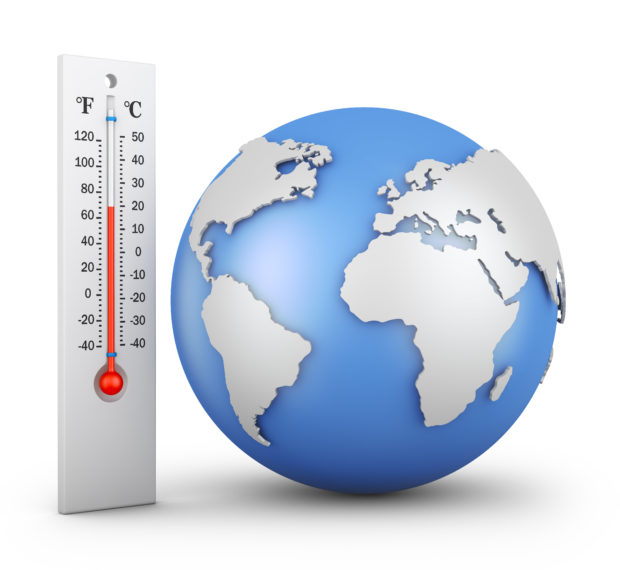
Within the next decade, Earth is likely to rise past 1.5 °C (2.7 °F) since the mid-1800s, which is the internationally agreed-upon goal made in Paris. If nations meet their plans, the planet will warm 2.3 to 2.5 C (4.1 to 4.5 °F), the report calculates.
Current policies put the world on a path for 2.8 °C (5 °F) of warming, providing context for upcoming U.N. climate talks in Belem, Brazil.
Even super-fast and deep cuts in emissions from coal, oil, and natural gas will still likely mean global temperatures rise at least 1.7°C (3.1°F) this century, with efforts then to bring them back down, the report says.
Ten years ago, before the Paris Agreement, the world was on a path to be about 4 °C (7.2 °F) warmer.
“We are making progress,” UNEP Executive Director Inger Andersen told The Associated Press. “We have to go faster.”
The United States — which submitted a climate-fighting plan in 2024 but is now set to exit the Paris agreement in two months — changes the future outlook significantly. Until the Trump administration decided to get out of the climate-fighting effort, the U.S. plan was promising some of the most significant cuts in future emissions, the report said.
The UNEP reported that the U.S. did not provide comments on the report by its deadline and asked that emissions data about the U.S. be removed. The UNEP declined but included a footnote at the U.S. request, saying that it doesn’t support the report.
Now the U.N. is calculating that the rest of the world must cut an additional 2 billion tons a year of carbon dioxide to make up for what the report projects is growing American carbon pollution. Last year, the world pumped 57.7 billion tons of greenhouse gases into the air and needs to get down to about 33 billion tons a year to have a chance of limiting warming to near the goal, the report said.
Climate Analytics CEO Bill Hare, who runs a separate emissions and temperature projecting report called Climate Action Tracker, said that his calculations match the report’s.
The numbers indicate “a lack of political will,” he said.
The Associated Press’ climate and environmental coverage receives financial support from multiple private foundations. AP is solely responsible for all content.
 Nearly 50,000 Cars Damaged by Floods This Year: CARFAX
  AI Models May Soon Self-Replicate Across Smart-Home Devices, Anthropic Warns
  Viewpoint: Insurers Are Automating the Front Office While Ignoring the Function That Determines Trust
  Friend of Suspected FBI Data Thief Warned Teen Not to Hack Bureau