













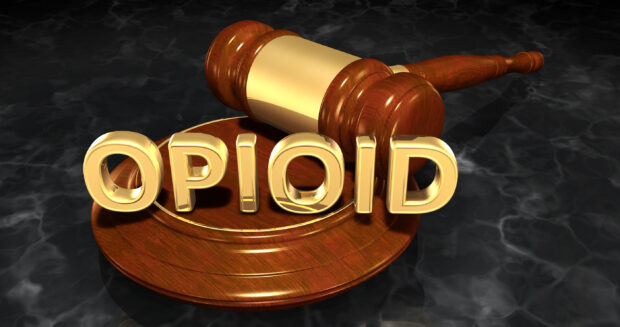
A U.S. appeals court on Tuesday revived a $2.5 billion lawsuit against drug distributors accused of contributing to an opioid addiction crisis in West Virginia communities, overturning a 2022 victory at trial by the largest drug suppliers in the U.S.
The 4th U.S. Circuit Court of Appeals ruled that a lower court incorrectly concluded that Cencora, McKesson Corp, and Cardinal Health did not create a “public nuisance” by supplying a flood of addictive pills to pharmacies in Cabell County and the City of Huntington.
The 4th Circuit reopened the case, saying the lower court should re-evaluate whether the three drug companies should pay for addiction treatment and prevention efforts in the city and county, based on their alleged failure to stop “suspicious” large orders of opioid pills from pharmacies.
Cencora, Cardinal Health, and McKesson did not immediately respond to requests for comment.
Huntington Mayor Patrick Farrell said that the city looks forward to a new opportunity to hold drug distributors accountable for “the devastating harm that they have caused our city and far too many of its families.”
The distributors had previously agreed to pay up to $21 billion to resolve thousands of lawsuits brought against them by state and local governments nationwide. But communities in hard-hit West Virginia opted against joining the national opioid settlement in favor of seeking a bigger recovery.
U.S. District Judge David Faber had ruled in favor of the three drug companies in 2022, finding that West Virginia’s “public nuisance” law did not create liability for companies that sold prescription drugs, and concluding that the three companies had complied with their duty to report suspicious drug orders to U.S. regulators. The 4th Circuit reversed both those findings.
The appeals court found that the three drug companies repeatedly shipped opioids to pharmacies in quantities that exceeded the distributors’ own thresholds for “suspicious” orders, without reporting the sales to the U.S. Drug Enforcement Administration.
For example, Cencora, formerly known as Amerisource Bergen, supplied 775 potentially suspicious orders from a single pharmacy in Cabell County over five years. Still, it only reported 16 of those orders to the DEA, according to the 4th Circuit.
(Reporting by Dietrich Knauth in New York and Nate Raymond in Boston; Editing by Richard Chang)
 AI Models May Soon Self-Replicate Across Smart-Home Devices, Anthropic Warns
  Push to End U.S. Changing Clocks Hits Dead End
  The Latest Launches From The Zebra, Sigo Seguros, Applied Systems
  Lyft to Pay $272M to Settle California Rideshare Drivers’ Wage Theft Lawsuit