














U.S. health authorities are currently investigating a multi-state outbreak of Salmonella Javiana infections linked to fresh jalapeño peppers.
The investigation is being carried out jointly by the Centers for Disease Control and Prevention and the U.S. Food and Drug Administration, alongside state and local health departments.
The FDA said reported illnesses began between June 19 and July 20.
The salmonella outbreak comes as U.S. health officials also investigate a multi-state Cyclosporiasis outbreak linked to lettuce supplied by privately held Taylor Farms, a major food-service producer whose customers include Yum Brands’ Taco Bell.
Here is what we know about the salmonella outbreak so far:
WHAT IS IT?
Salmonella is a group of rod-shaped bacteria that can cause salmonellosis, a common foodborne illness. Symptoms typically include diarrhea, fever and abdominal cramps, which usually develop 12 to 72 hours after consuming contaminated food and last four to seven days.
Young children, older adults and people with weakened immune systems are at greater risk of severe infection and complications.
As of August 5, 345 people across 27 states have gotten sick with the strain of salmonella linked to jalapeños. Thirty-six people have been hospitalized, and no deaths have been reported.
Cases have been reported across 27 states spanning the Midwest, South, and West, underscoring the broad distribution of the contaminated jalapeño peppers.
Salmonella remains one of the leading causes of foodborne illness in the United States, causing an estimated 1.35 million infections each year, according to the CDC.
Historically, some of the largest U.S. salmonella outbreaks include a 1985 milk-linked outbreak that caused 5,770 culture-confirmed cases, a 2010 egg-linked outbreak during which 3,578 illnesses were reported nationwide, and a 2008 outbreak traced to contaminated jalapeño and serrano peppers that sickened 1,442 people.
WHAT DO WE KNOW ABOUT THE CONTAMINATED PRODUCE?
The infections have been linked to jalapeño peppers from Sinaloa, Mexico, and distributed by Coast Citrus Distributors to distributors, restaurants, and food service companies, including Mexican-style restaurants in the U.S.
After being notified about the outbreak, Chipotle Mexican Grill and QDOBA stopped serving affected jalapeño peppers. QDOBA restaurants are also no longer serving jalapeño peppers.
Among interviewed patients, a large majority reported eating at Mexican-style restaurants before their illness, including Chipotle Mexican Grill and QDOBA, with meal dates ranging from June 14 to July 14.
Coast Citrus Distributors has agreed to recall jalapeno peppers linked to this outbreak.
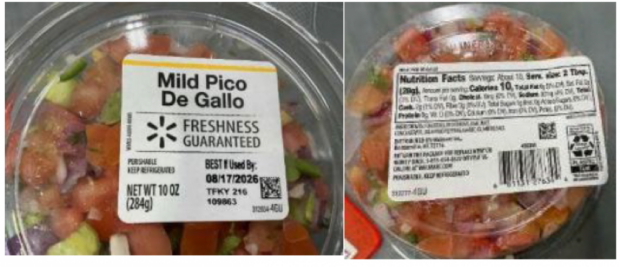
Taylor Farms has recalled prepared food items containing jalapeño peppers, including salsa and guacamole sold by retailers, because of concerns about potential salmonella contamination. The California-based supplier has stopped sourcing from a farmer in Sinaloa, Mexico, after it was identified as a possible source of the outbreak.
As the products have been removed from their stores, FDA does not consider there to be a current ongoing risk from these establishments to consumers in this outbreak. The regulator is working with Coast Citrus Distributors to determine the full distribution of these products.
WHAT CAN PEOPLE DO TO PROTECT THEMSELVES?
Distributors, restaurants, and food service operators should not sell or serve fresh jalapeños imported from Sinaloa, Mexico, by Coast Citrus Distributors. Recalled jalapeños they may have frozen, as well as any fresh jalapeños from Sinaloa, should be discarded if the supplier cannot be confirmed, according to the FDA.
The FDA advised consumers who recently dined at a Mexican-style restaurant and have become ill to seek immediate medical care.
Common remedies for the infection include antibiotics like fluoroquinolones, azithromycin, and third-generation cephalosporins, usually prescribed for severe cases or high-risk patients, according to the CDC.
Restaurants and retailers have been advised to use extra care in cleaning and sanitizing any surfaces and containers that may have come in contact with this product to reduce the risk of cross-contamination.
WHAT SURVEILLANCE IS BEING DONE?
The outbreak is monitored through a coordinated surveillance system involving the CDC, FDA, and state and local public health agencies. Investigators use epidemiological interviews, laboratory testing, and food traceback investigations to identify the source of contamination and track its distribution.
The FDA is currently conducting traceback efforts, testing samples, reviewing distribution records, and overseeing recalls to prevent additional contaminated products from reaching consumers.
(Reporting by Padmanabhan Ananthan in Bengaluru; Editing by Devika Syamnath)
 Hurricane Hunter Data Reveals 4 Signs of a Strengthening Storm
  Kin Offers HELOC to California Homeowners
  States Question Safety, Challenge FAA Review of Commercial Drone Delivery Rules
  Zurich Insurance Group Completes Acquisition of Beazley, Names New Leadership for Insurer