














Climate change is to blame for more than one-third of U.S. flood losses over the past three decades, according to a new study from Stanford University researchers.
The study, published in the journal Proceedings of the National Academy of Sciences, reports that intensifying precipitation related to climate change is responsible for almost $75 billion of the estimated $199 billion in flood damages in the U.S. from 1988 to 2017.
“The fact that extreme precipitation has been increasing and will likely increase in the future is well known, but what effect that has had on financial damages has been uncertain,” said the study’s lead author. “Our analysis allows us to isolate how much of those changes in precipitation translate to changes in the cost of flooding, both now and in the future.”
The researchers also noted that exceeding the levels of global warming agreed upon in the United Nations Paris Agreement is very likely to lead to greater intensification of the kinds of extreme precipitation events that have been most costly and devastating in recent decades.
The researchers envision their model also being applied to other natural hazards, to climate impacts in different sectors of the economy, and to other regions of the globe to help understand the costs and benefits of climate adaptation and mitigation actions.
Source: “Climate change has caused billions of dollars in flood damages, according to Stanford researchers,” Stanford.edu, Jan. 11, 2021
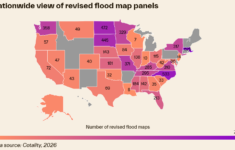
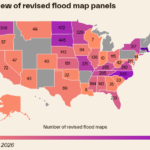 FEMA’s New Flood Maps Mean More Homes Require Flood Insurance: Cotality
  Amazon Cargo Plane Pilots Weren’t Warned About Wind Before Miami Crash: NTSB
  Highway Safety Agency Plans to Revise Outdated Vehicle Lighting Rules
  Sedgwick: Property Claims Face Delays, Are Growing More Complex