
















Global catastrophe risk management firm RMS has released version 16.0 of its catastrophe modeling platform, which includes updates to both the Europe Windstorm Clustering Model and Terrorism Modeling suite. Also included are the new Marine Cargo & Specie Model and U.S. Flood Hazard Data, according to a statement from RMS.
• The U.S. Flood Hazard Data covers all sources of coastal and inland flooding for the contiguous U.S., providing defended and undefended views of flood extent and depth for three return periods (100-, 250-, 500-year) at 30-meter resolution. The data also reflects the hazard component of RMS’s upcoming U.S. Flood Model, targeted for release in 2018.
• The Marine Cargo & Specie Model includes more than 2,000 vulnerability functions to capture the damageability of different cargo and storage types for wind, storm surge and earthquake perils across nearly 80 countries and territories. Industry exposure databases and mapping files for 150 global ports support more granular quantification and visualization of marine exposure in key accumulation areas.
• The Europe Windstorm Clustering Model has been updated with new historical data, insights into clustering variability and new data analysis methods. It provides a more certain view of clustering impacts on losses, informing more effective capacity management throughout the region and support for Solvency II model validation requirements.
• The Terrorism Modeling suite has been updated, including the Probabilistic Terrorism Model, Terrorism Scenario Model, the Terrorism Target Database and the Industry Loss Curves. Data-driven updates to select targets, conditional attack probabilities and the overall event set across seven countries have been incorporated into all RMS terrorism modeling solutions, and Paris has been added as a newly modeled region.
Source: RMS
 Federal Bill Seeks to Reduce Work Week to 32 Hours
  Highway Safety Agency Plans to Revise Outdated Vehicle Lighting Rules
 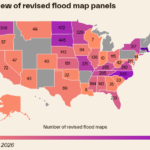 FEMA’s New Flood Maps Mean More Homes Require Flood Insurance: Cotality
  Push to End U.S. Changing Clocks Hits Dead End