

















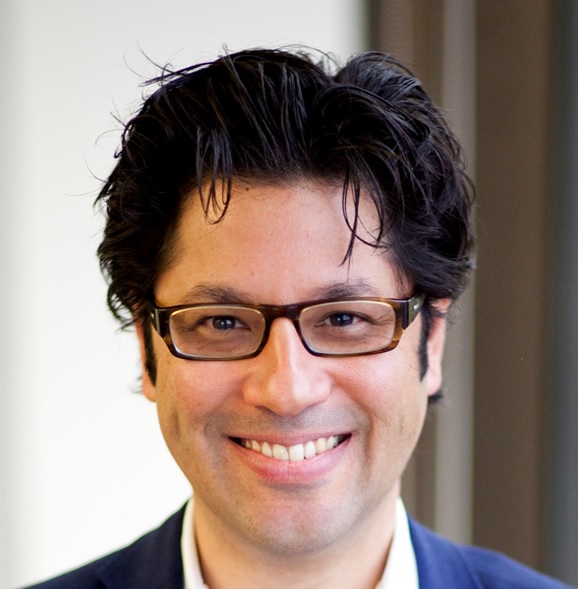
Not many CEOs are willing to talk publicly about their biggest misfires and what they learn from them. Hemant Shah did not hesitate when confronted with the question.
Executive Summary
RMS CEO Hemant Shah discusses the evolution of catastrophe modeling and his firm, along with the lessons he’s learned on a journey of analytic innovation over the course of more than two-and-a-half decades.The co-founder and CEO of catastrophe modeling firm RMS recalled a time a few years ago when the company pushed out to the marketplace “a dramatic new update.” The thing is, RMS’s clients didn’t get enough warning about the change, he says, referring to the release of Version 11 of RMS’s Hurricane model.
“We were so wrapped up in our own research and development and our own work that we failed to really anticipate and help the marketplace understand the changes we were introducing, and introduced too much change at once,” Shah recalled in a recent interview with Carrier Management.
One could argue that Shah took that customer communication lesson to heart. After that experience, he implemented a number of changes (more on those later). But that understanding about the need for better communication seems to be at play particularly with RMS(one), which is among the most important products under development in the company’s history. It is a cloud-based catastrophe risk management system built with the idea of modernizing and transforming the industry, with improvements in speed, reliability and security of the data it generates and can house.
 Earlier this year, however, RMS delayed a full production rollout for RMS(one) until fall—in part, to iron out further kinks. Shah was candid about the issue as he spoke to a large audience of property/casualty insurance industry professionals at the RMS Exceedance 2014 conference in Washington, D.C. in April, reflecting that RMS had “a lot more to do.”
More changes are afoot, however, though Shah said that RMS remains in close contact with customers about the latest developments. RMS announced in September that “we are working toward a revised plan and it is progressing well.”
‘We are committed to, at a minimum, making RMS(one) available to our customers to run our new generation of high-definition models by the end of 2015,” Shah told Carrier Management. That is the commitment I made to the market [in September], and that is the timeline we are now working toward with RMS(one).”
Silicon Valley Meets P/C Insurance
Launched 25 years ago, RMS has become a formidable presence in the catastrophe modeling industry since its initial spinout from Stanford University and early days operating out of Shah’s apartment. With 1,100 employees in the U.S., Europe and Asia, the company (now owned by Daily Mail and General Trust) generates $300 million in annual revenue compared to approximately $30 million just 15 years ago.
Shah said that RMS “is profitable and has been so for many years,” though it invests “a lot in research and development, and that certainly influences our margins.”
Building a company from scratch requires learning on all kinds of levels—and the honing of skills ranging from entrepreneurial to leadership and communication. As RMS has evolved in these areas over the years, Shah said he has too.
Part of that evolution has focused on reconciling the dynamic, charismatic style and presentation of both Shah and RMS (particularly at RMS’s annual shows) with a relatively conservative insurance industry customer base. In the beginning, RMS’s founders and early employees were focused on transforming the insurance industry and how they modeled future catastrophe events. That’s a bold perspective to take with an industry that is traditionally conservative and focused on gradual change.
Update on RMS(one)
An RMS spokesperson told Carrier Management via email that the company is taking a number of specific steps to get RMS(one) ready for launch:
“Our revised timing for RMS(one) is specifically designed to deliver a program of incremental deliverables throughout 2015. We are taking advantage of new technologies to simplify key elements of the design of RMS(one) and improve the performance, functionality and openness of the system to deliver a highly configurable platform that our clients can use in ways that meets the specific needs of their business.”
“When RMS was a tiny startup, there was an inherent audacity to what we were doing,” Shah said. “The market for what services we were providing was not coherent. The technologies and techniques were quite innovative and somewhat disruptive. We were a bunch of naïve people charging out of Silicon Valley with ideas about how analytics could reshape this industry.”
Still, he asserted, the insurance industry has embraced RMS and its high-tech approach to cat modeling almost since the beginning.
“We have had no other industry [client] since this insurance vertical since Day One,” Shah said. “We are who we are because customers embraced us.”
Shah acknowledged that P/C insurance is a “relatively conservative” industry, but he said his clients have grown to understand the technology and the speed and push for change—sometimes through firsthand visits.
“I had a client—a very senior executive—who came out to see us in Silicon Valley,” Shah recalled. “He said something to the effect after visiting us here and seeing us in our home environment: ‘Now I get it. It is a Silicon Valley technology company that happens to focus on the insurance industry.'”
Shah explained: “There is a cultural tension sometimes, but that is who we have always been at RMS. This is not a new persona that we have put on. We have always been about innovation and change and pushing boundaries and thinking differently.”
Shah said RMS wants to help the insurance industry “make a real impact on the world. We are about change and new ways of thinking—and for the most part, our clients kind of like that about us and don’t want us to be anything different.”
Transformation
Over 25 years growing RMS, Shah has been witness to major changes in the insurance industry in which he and his company work.
“The industry is certainly more analytically sophisticated,” Shah said, despite conventional wisdom that points to the insurance and reinsurance industry as not being the most progressive when it comes to embracing change.
“To those of us who have a close vantage point, it has been quite remarkable over the past couple of decades [to see] how deeply this marketplace and its market leaders have embraced technology, data and analytics as a core competence of the firm—to help them deploy, allocate, manage and price capital more efficiently and more responsibly,” he said.
Shah added that those changes have been both “significant and positive” and that the pace of change in this area is accelerating.
But beyond the embrace of technology, data and analytics, Shah said that P/C insurers have become significantly more resilient in terms of its ability to respond to large-scale catastrophic events.
“It’s not just in terms of having more capital,” Shah said. “It has a much better ability to manage its risk but also respond to large-scale catastrophe in a way that provides continuity of cover and not have market disruption that used to occur quite often.”
That said, Shah argued that the insurance industry must figure out how to adapt to a rapidly changing world.
“The industry needs to spend more time thinking about how to innovate and extend its relevance to a changing world and less time worrying about zero-sum dynamics of market conditions and cycles,” Shah said. “If it is not careful, it will find itself competing over a shrinking pie. The global insurance industry has been inexorably shrinking as a share of the economy, even while risk increases on a global scale.
“Forward-looking leaders are embracing this,” Shah said. “The insurance industry has a vital role to play, but if it is not careful it will become less and less essential to the global economy. Unfortunately, that has been a trend for many years that needs to be reversed.”
Catastrophe Changes
By the same token, Shah pointed out that catastrophe modeling has become far more sophisticated in the last 25 years as it seeks to meet the evolving needs of its insurance industry clients.
Today’s models have become “much more sophisticated, more granular, more high-resolution and much more accurate over time,” he pointed out.
“That being said, we keep reminding ourselves at RMS the problems we are trying to quantify remain profoundly complex and uncertain events. We need to be continuously mindful of the fact that even though models are much more sophisticated, we’re still dealing with pretty uncertain problems and need to be careful to strike the right balance in celebrating increased sophistication of models and calling out uncertainties.”
Within the next 10 years, Shah said, catastrophe modeling at RMS and elsewhere will increasingly move into areas including flood modeling and broader climate-change risk.
“One big theme getting a lot of attention in our modeling is flood models in the cat modeling field,” Shah said.
He explained: “Flood risk was seen as a third rail of cat modeling. [It is] very challenging to model, and the resolution of data you need is extremely high resolution.”
But that notion has changed in the last few years as computational sciences have enabled more sophisticated modeling “to develop high-resolution, large-scale models of flood risk just at a time when flood is becoming even more of a driver of cat risk on a global scale.”
This will accelerate, Shah said, as development increasingly focuses on flood plains and urban mega-city development accelerates in the U.S. and in Asia and emerging markets around the world.
As well, Shah envisions modeling focusing more broadly on climate-change risks.
“Right now, cat modelers tend to talk about the hurricane model, tornado model, flood model, windstorm and drought,” Shah said. “These are all manifestations of climate.
“Technology and science are getting to the point where, over the next five to 10 years, we can expect more integrated hazard models that integrate our understanding about what were previously distinct and separate perils.”
Beyond cat modeling trends, the future also breeds competition and new approaches, such as the open-source Oasis Loss Modelling Framework. But Shah argued that RMS has already been well ahead on this idea, particularly with how it had designed RMS(one).
“We really showed leadership a few years ago by making clear that our strategy, which is driving a lot of our investment in RMS(one), is to open up our models and ensure we not only deliver our models but [also create] an environment in which the industry can develop its own models or access the models of others,” Shah said. “This is something we have embraced for years. It is driving our strategy, and we think it is healthy.”
RMS Milestones
- 1988-1989: Company begins at Stanford University.
- 1992: Launch of U.S. hurricane model.
- 1994-1996: RiskLink, ALM for Treaty Reinsurers/London office opens.
- 1998: RMS models cover 40 countries.
- 1998: Daily Mail & General Trust buys RMS.
- 2002: Expansion of weather risk products, plus launch of terrorism and workers comp models.
- 2006-2008: Updated U.S. hurricane model, Europe windstorm model, launch of new U.S. and Canada climate hazard models, upgrade of North American earthquake models, expansion of Latin American earthquake models.
- 2010 to present: Upgrade/expansion of North Atlantic hurricane models, European windstorm models, expansion of Asian model suite. Models now cover more than 90 countries.
- RMS(one) is close to rollout.
Source: RMS
In other words, he said the development of Oasis is complementary to RMS’s own strategy goals with its models and platform.
Entrepreneurial Leadership Style
Shah describes his leadership style as one of an “entrepreneur/founder.”
“This is a very personal journey for me, and so I manage and lead in a very personal, hands-on way,” Shah said. “I like to form highly inclusive collaborative teams. I love the give and take of innovation. I like being quite close to the work, and I like to motivate people by building a shared sense of mission and purpose that what we are doing has meaning, and that meaning motivates and drives us to perform over long periods of time.”
This approach has been pretty consistent since RMS’s founding, Shah explained.
“I have always been like this. It is sort of my nature,” Shah said. Still, he noted that he has had to evolve as the company grew.
“Over time I have had my share of challenges and learning experiences. When I first started RMS I was just a kid—23 years old, right out of graduate school. It is always a challenge when there are five or 50 people or 200” working for the company, he said, adding that it is much easier to touch every part of the business when it is smaller.
While 1,100 employees doesn’t make RMS a massive company, it is certainly much larger than it was before. So Shah said he has had to build in more process and scale to adapt. He insisted, however, that his overriding creative goal to be collaborative remain the same.
“I am fortunate to work with so many colleagues who have been with the company for such a long period of time,” he said. “The sense of being on a shared journey with one’s colleagues to accommodate very audacious goals is always how I have oriented myself and the company to the work, and it has gotten us this far.”
Shah said that he cares and is “really passionate about the mission [RMS is] trying to fill: to ultimately make the world a safer and more resilient place.”
“By understanding risk, we can mange risk more effectively, and by managing risk more effectively, we can ensure capital is provided to help people recover from disasters,” he says, completing the mission statement.
Shah said his role as manager is to pursue RMS’s mission and make an impact while doing so.
“I am on this journey for a long time. It infuses everything I do. I like to think it helps build a team around me that also wants to be on this journey and it helps us then take a really long-term view,” he said. “Customers who see us at our best more deeply recognize we are a commercial business. But there is a purpose and mission to what we do. And we can all align around doing the right thing over a long period of time.”
Shah readily admits he makes mistakes (“lots of them”) but said RMS continues to focus on doing the right thing to help the P/C insurance industry do its job better.
“The orientation to this is about doing the right thing to make this industry more effective and society more resilient,” he said.
He also tries to learn as he moves ahead, such as in the wake of the dramatic product launch where customers didn’t get enough warning about all the big changes.
The experience taught him plenty. RMS must keep moving ahead, he said, and continue learning as science and data evolve. Changes must come faster, he said, but incrementally, so huge transformations aren’t rolled out all at once. Also, the experience was a blunt reminder to keep customers in the loop.
“We collaborate with customers,” Shah said, “so they have more transparency into research and development, and better appreciate what we’re learning, and anticipate our plan for what our research may mean for their view of risk.”
To boost that collaboration, Shah said that RMS has expanded its core group of modeling scientists by about 30 percent. It was the right move, Shah insisted.
“It is the right investment to make,” Shah said, so “that, as the world’s leading modeling firm, our customers understand not only what we built but what we are learning as we go.”
 Liberty Mutual Announces Leadership Restructuring for CRS and LMI
  From Volatility to Value: How Carriers Can Build Durable Growth
  TikToker Sentenced to 7 Years for Stealing More Than a Dozen Cars Valued at $600,000
  Predicting the Insurability of Prediction Markets