

















A long-term drop in alcohol-related crashes was seen after Utah imposed a stricter limit on the amount of alcohol drivers are allowed to have in their system, a new study from the Insurance Institute for Highway Safety revealed.
The first U.S. state to lower the blood alcohol concentration (BAC) threshold for impaired driving to 0.05% from 0.08% in December 2018, Utah remains the only one.
The stricter limit led to a nearly 9% reduction in alcohol-related crashes over the next four years, researchers found.
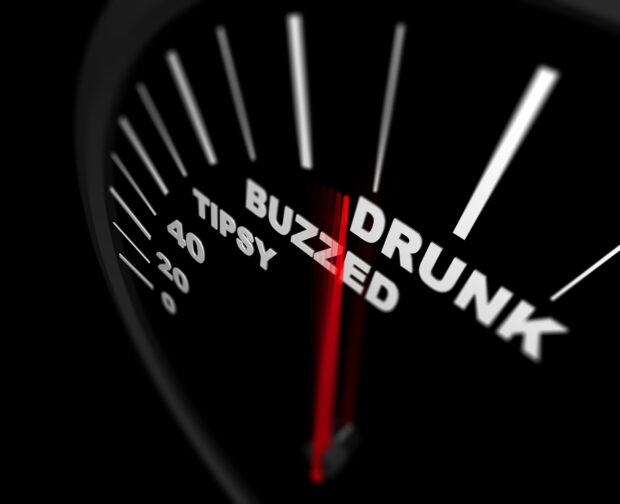
“Crash risk increases with the amount of alcohol in your system, but it spikes noticeably at 0.05%,” IIHS President David Harkey said. “A lower limit is grounded in science and also sends a message that buzzed driving is drunk driving, as the slogan goes.”
U.S. states began widely adopting per se laws, which make it a crime to drive with a BAC above a certain limit even if the driver does not appear to be intoxicated, in the 1980s.
Limits were initially set as high as 0.15%, and remained at 0.10% in many states for quite some time.
A BAC limit of 0.08% only became universal in 2005, after the Department of Transportation made it a requirement to receive certain federal highway funds.
In 2013, the National Transportation Safety Board recommended states lower their limits further, to 0.05%. A BAC of this level significantly impairs depth perception and slows reaction time, the agency argued, and other industrialized nations had seen immediate drops in fatal collisions when they adopted a 0.05% limit.
Utah’s 0.05% per se law went into effect on Dec. 30, 2018. While an earlier study showed a substantial drop in fatal crashes over the first year, the impact on alcohol-involved crashes was unclear, researchers said.
IIHS Senior Research Scientist Angela Eichelberger and independent researcher Scott Tippetts analyzed the first four years of crash data.
While the earlier study relied on police reports of alcohol involvement, the new study also counted other crashes as alcohol-involved. These included cases in which alcohol-positive test results were added to the crash report later and cases in which the driver refused to take a BAC test.
Researchers also looked at changes in the number of single-vehicle nighttime crashes — which can be used as a proxy for alcohol involvement. They also compared Utah’s alcohol-involved crash rates before and after the implementation of the law with crash rates in Arizona, Idaho and Colorado.
Several complicating factors influenced the results, researchers found.
First, Utah has always had one of the lowest rates of alcohol-involved crashes in the United States because many residents abstain from alcohol for religious reasons.
Second, the state passed its 0.05% BAC law with great fanfare more than a year before it was implemented, and the publicity may have affected people’s behavior before the law took effect.
Finally, the COVID-19 pandemic, which resulted in spikes in alcohol use and drinking and driving nationwide, occurred midway through the study period.
The long-term effect of Utah’s 0.05% law looks more impressive against the comparison states (Arizona, Colorado, and Idaho), where the rate of alcohol-involved crashes increased. Relative to the three other states, the share of crashes that involved alcohol in Utah dropped 12%-21%.
The relative decrease was similar even when the pandemic was excluded.
“These encouraging results from Utah should make other states take note,” Harkey said. “More than 10,000 people lose their lives in alcohol-related crashes every year in the U.S. We need to use every tool we have, including stricter BAC limits, to reduce that toll.”
 Viewpoint: Six Questions Every CIO Should Ask Before Their Next AI Investment
 AAA Survey Reveals Disconnect in Drivers’ Obeying ‘Slow Down, Move Over’ Laws
 Companies, Governments Fight Hacking Attempts in Rush to Patch PHP Flaws
 Levers and Guardrails: How Growth Is Being Built at Hippo