
















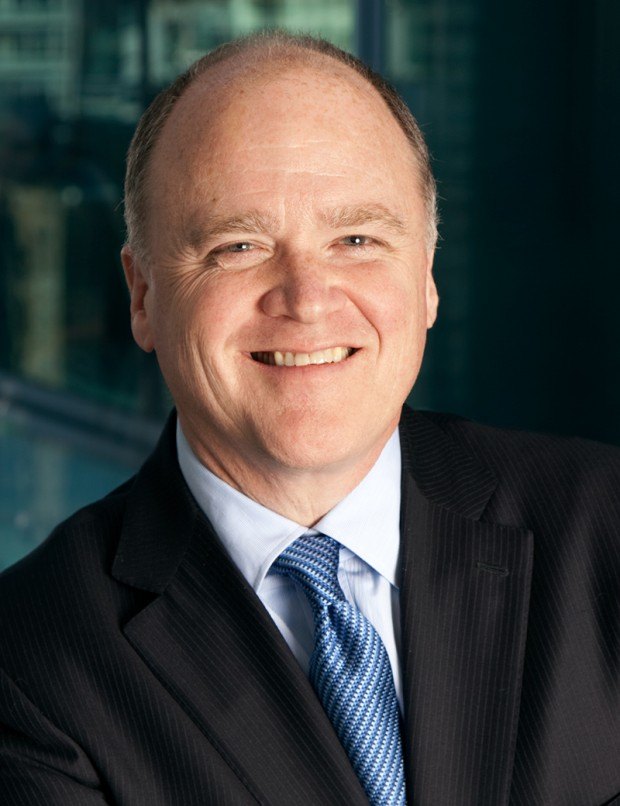
If you want to spark innovation in your company, move your best people out of your most profitable businesses, XL’s chief executive officer advises.
Mike McGavick, the CEO of Dublin-based XL Group whose admonitions about a crisis of creativity and innovation in the property/casualty insurance industry were widely reported last year, offered the idea when asked what leaders should do to make innovation blossom at their companies.
Executive Summary
Leaders need to move out of their comfort zones to drive innovation in their companies and to turn around problem businesses, according to XL’s CEO Mike McGavick.“Get your best people thinking about areas where innovation is required, rather than where maintaining the status quo of profitability is the job,” he says.
McGavick explains that management teams often assign their most talented people to their most profitable lines as they seek to extend their advantages in money-making businesses. But that’s a mistake, he believes.
“If we have a real well-running business, then that’s a great opportunity to develop new leadership in that business,” he says. “You must have a surfeit of talent to be producing a great result. So rather than stagnating your best talent in already profitable areas,…apply them to more challenged businesses and to more interesting opportunities for product innovation and growth,” he says.
McGavick believes that a second ingredient in the innovation formula is having a deep commitment to analytics—and emphasizes that the analytics should not be just “reading the history of performance of what you want to insure.”
McGavick says: “With all the change that’s going on in the world, you can’t believe that you will always have 20 years of data history on everything going on in order to make an informed loss pick. You’re going to have to use adjacent thinking or new databases to get your arms around how to approach the potential losses in a new type of risk.”
“The reality is whole industries will come and go in the span of time that we used to want a data set before we’d consider insuring you,” he continues. “So we can either forego being part of that rapidly changing economy, or we can adapt the ways that we develop our information in order to match the pace of change.”
Offering a third suggestion for creating innovative companies, McGavick advises: “Be close to your client. You have to be listening very carefully. This means that you have to work with and through your brokers”—and directly with clients as well—“to really understand how they are thinking about emerging risk, and how they are responding, in order for you to be able to help them respond.”
“You have to listen with a different mindset to really be useful, instead of trying to continue to convince the risk managers that your existing products are all they need,” he said.
Get Less Comfortable
During a 50-minute interview with Carrier Management, we asked McGavick not only to share his views on how leaders can drive innovation at their companies, but also to describe the lessons he learned while leading two teams that turned around troubled insurance carriers—XL and Safeco. As he fielded questions about both topics, the CEO’s answers seemed to have a recurring theme—move beyond your comfort zone.
“One defining thread of my career is that I was continually given jobs for which I was, at least to the outside world, unqualified—and where others were unwilling to take the job,” he says, when asked about lessons from the two turnaround experiences. (McGavick’s name is also linked to a third earlier turnaround of a commercial agency division at CNA, but he says the turnaround was completed after he left the Chicago-based company.)
“A little bit of what I take away is that if you want to do exciting things, you have to be willing to take on assignments where others may not see the logic. That often means taking on something that is not performing well to see if you can discover the essence of what is good about that business and harness it.”
When asked to describe how his advice about innovating is put into action at XL, McGavick chooses an example that also involves removing someone outside of comfortable boundaries—in this case, Gregory Hendrick, who was appointed Executive Vice President of Strategic Growth in 2010.
Up until that time, Hendrick had been running XL’s Bermuda-based property catastrophe reinsurance business. “He had a great aptitude for technology and data, and a hugely profitable book of business that had been built over time.”
This was a “jewel of XL, [but] my assessment was that Greg’s talents were best used elsewhere,” McGavick says, explaining why Hendrick was asked move into a corporate role, “which most P&L guys never want to do,” to work with McGavick to develop a new strategy for the company.
“Greg went way out of his comfort zone,” McGavick says. Hendrick’s piece-by-piece analysis of insurance operations worldwide, which represents two-thirds of XL’s business, resulted in a restructuring into 35 insurance units—a task seemingly far removed from his expertise with the other third in reinsurance.
Innovation Tips
XL’ CEO Mike McGavick believes there are three actions property/casualty insurance company leaders can take to spur innovation in companies:
• Be willing to move the best people out of profitable divisions
• Make a commitment to analytics
• Communicate with—and listen to clients—with a different mindset
Hendrick has since taken over the leadership of XL’s entire global insurance operations, taking the title of Chief Executive of Insurance Operations in November 2011 (when the former Chief Executive retired). McGavick observes that “it is the improving profitability of the insurance operations that has everybody excited about XL,” crediting Hendricks with having “imagined a new way of operating”—and now executing on that vision as the leader of that business.
Sage Advice
For McGavick, the ideas of creating success from discomfort and giving smart colleagues a great deal of responsibility for crafting solutions to difficult problems were ingrained in his leadership style well before he entered the insurance industry—back when a young college dropout was chauffeuring former U.S. Senator Slade Gorton around the state of Washington during a political campaign.
McGavick, who did eventually graduate from the University of Washington, recalls the mentor’s response to a question about why Gorton thought some talented individuals achieve great success while others fail to do so.
To be successful, “you have to be willing to think very deeply about any problem you are tasked with confronting, and that means you can’t just rely on all of your going-in assumptions,” McGavick recalls the three-time Attorney General counseling his driver. Most people will only think hard enough until they can fit the problem to match a set of pre-existing assumptions they have about it. But that’s really when the hard work starts, Gorton told McGavick, advising that successful people challenge their own assumptions.
“Very few people go that extra step. It’s just too much work. It’s not comfortable,” McGavick says.
The leader of XL, who later worked on Gorton’s campaigns and eventually became his chief of staff, also recalls that the former Senator was “always hungry to have people around him that he viewed as smarter than himself.” The politician gave those staffers “a lot of freedom of action within a defined game plan, which he helped coordinate,” McGavick says.
“Having that sense of responsibility at a young age, and seeing someone offer so much trust to other people—focusing his work on enabling other people to work on behalf of the cause—was a fantastic lesson,” he says, noting that it shaped the way he thinks about leadership.
Crisis Management
McGavick stresses the fact that a team of people solved the problems of XL that started to emerge some months before he joined the company in May 2008, when asked to recount the issues five years later.
“We really had two significant challenges that came back to back,” he says, recalling that the first was extricating XL from a financial guaranty business (Security Capital Assurance, which was spun off as Syncora). “We raised capital to fund the solution, and thought we were on our merry way. At which point, the full downturn in the global economy and investor confidence took place across all the markets,” plunging XL into another crisis. “Our investments rapidly declined in value and investors lost confidence at XL, as did brokers—and we were concerned, so would clients and colleagues,” McGavick remembers.
“We were able to fight through that intense period,” and XL, which was the second worst performing stock on the S&P 500 in 2008, became the best performer in 2009.
“We felt we were fine long before the market recognized it,” McGavick says. While October 2008 was a low point in terms of all parties’ confidence in XL, he recalls that within a few months—as the company headed into the Jan. 1 renewals in 2009—“clients and colleagues were staying with XL despite all the noise and uncertainty that was being stirred up.”
“As we saw that behavior, it gave us the belief that the claims that XL was not going to be around were wrong.”
But the work of turning XL around was not entirely complete, according to McGavick, who refers to the activity to transform XL’s insurance business in 2010 as “the second act of the play.” In addition to McGavick and Hendrick, key players in that second act were a new compensation structure and a commitment to technology—both designed to attract and retain the best underwriting talent.
“We became convinced that our core organization and business practices had to be redesigned around two ideas—that we have to be the single most attractive environment for quality underwriting talent, [and that] we would use technology to enable that talent to operate in a preferred environment with deep insight,” McGavick says.
He explains that XL compensates members of underwriting groups according to their units’ performance as well as overall corporate performance. “This gave underwriters, actuaries, claims professionals and others with deep expertise in particular lines of business a particular incentive to be part of this company—where their individual performance can get differential rewards.”
XL Group’s 2011 annual statement notes that more than 100 new underwriters were added in that year, as a result of the company’s commitment to a talent goal.
Explaining the approach to technology, McGavick says, “We believed that we could lower our cost of operations, enable growth in new businesses and inform and enable our professionals to work better.
In 2012, XL started rolling out a global underwriting platform, which McGavick says “will lower the amount of time spent on mechanical tasks, and increase the time underwriters have to focus on evaluating risks and attracting risks to the company.” It will also be open “pipelines for addition of analytics to assist them in their work,” he says.
Lessons Learned
McGavick emphasizes that no one individual crafts a company’s turnaround. “These are very highly complex problems that require a lot of disciplines and a lot of collaboration to solve,” he says.
Still, the CEO is gracious enough to tolerate a reporter’s questions about what he has learned from being involved with turnarounds—first speaking to strategies that fixed Safeco and the similarities to the situation he encountered at XL.
“The lesson I took from that [Safeco] experience was that in the end [what] really matters when you are in a business that’s struggling is that you deeply understand what it is about that business that is unique in the marketplace—that gives it a reason to exist,” he says.
McGavick believes that Safeco suffered from “overconfidence in the 1990s,” which led the company away from its core lines” in the small commercial and personal lines space “where they were incredibly disciplined operators.” The company made acquisitions in large commercial and Lloyd’s “where the defining characteristic between winning and losing is not that same operational efficiency and discipline that they were so renowned for in the personal lines and small commercial space.”
By refocusing Safeco on “what they were critically good at, and then enabling that with a whole new wave of technology and new leadership, we were able to capture the culture of what was special about Safeco,” he says.
While the underwriting focus at XL was very different—on complex risks and global specialty lines businesses—McGavick sees a parallel in their turnaround stories. Like Safeco, XL also strayed from its roots, he says, explaining that after many years of success, some in the company decided it was time to move into a broader array of financial services. “Many of the lines entered into simply weren’t suited to the talents and culture of the company.”
“By distracting the firm with very different financial instruments businesses, XL similarly lost its way. And by getting back to those core businesses where we had a track record, and where we had a culture and a workforce that was matched to it—and by infusing that with a renewed focus on talent and technology—we’re seeing XL move back into the leading group of insurers of its kind.”
Act Three
2012 saw XL’s underwriting results for insurance rebound to just over breakeven (100.6% combined ratio), after a setback in 2011, when the segment combined ratio rose up near 112%. XL attributed the 2011 result to nearly 10 points of catastrophe losses and the impacts of seven underperforming businesses, which were slow to react to the corrective actions developed in 2010. (Reinsurance remained profitable in both years.)
Overall, XL recorded $614 million of operating income and a combined ratio of 96.3% for 2012, and McGavick chacharacterized it as “a solid year of continued progress.” Still, when speaking to analysts on the company’s fourth-quarter earnings conference call he said, “This is not yet the XL we dream of.”
Among XL’s recent product launches is one that came as a result of an internal product development competition, XL Competition 25, conducted in 2011 in celebration of XL’s 25th Anniversary.
Developed by XL’s construction surety and subcontractor default insurance specialists, the product known as CapAssure, is a two-part insurance policy to protect construction owners from the risk of default by general contractors and to protect general contractors from the risk of default by subcontractors.
According to XL marketing materials, other recent innovations from the company include:
• A new umbrella casualty form introduced in April 2012 with two insuring agreements in one policy—one following the terms of underlying primary insurance (Insuring Agreement A), and the other providing standalone umbrella on its own terms over a Self Insured Retention (Insuring Agreement B).
• XL WorldPath, a set of global insurance solutions for North America-based multinational companies with cross-border property, casualty and environmental insurance coverages to help address international legal, regulatory and tax compliance considerations, introduced in April 2011.
• XL Eclipse, a comprehensive cyber risk solution, introduced in 2011.
In addition to a goal of consistently returning superior returns to shareholders, McGavick told Carrier Management he has a top-line goal in mind that is very different from those of other leaders who aspire to be among the top commercial insurance premiums. “One measure of success will be increasingly seeing our revenues coming from new products or innovations, where through this great talent we’ve assembled we have seen the way risks are emerging and have been able to deal with them in a way that our clients view as being worthy of the expenditure.”
One metric McGavick has his eye on is a list of Top 10 New Product Announcement Pacesetters, which is compiled annually by Advisen, a New York-based research and analytics firm. “We were third two years ago, and second last year. I’d like to be first on that list,” McGavick says.
(Editor’s Note: Zurich-based ACE Group took the No.1 spot on Advisen’s innovator ranking in 2012.)

Leadership Matters: Enhanced Corporate Governance May Mean Better Results
CFOs Express Growing Confidence in U.S. Economy
Understanding Hurricanes: The Basic Facts For Carrier CEOs
CEOs & The Itch To Quit
Reader Comments