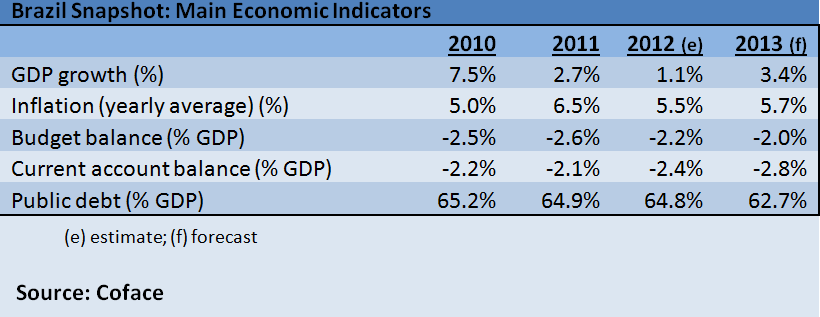















With a gross domestic product of $2.42 trillion, Brazil is already the world’s sixth largest economy—bigger than the UK. A diversity of trading partners, as well as a mix of agriculture, raw materials, manufacturing and services bodes well for continued growth and reduces vulnerability to global economic upheavals.

Brazil eco indicators with Word corrections eliminatedBudget balance is the difference between government revenues (such as taxes) and spending. A positive balance represents a surplus; a negative balance indicates a deficit

Current account balance, capturing a country’s international monetary transactions, is the difference between a country’s exports and imports of goods and services plus net returns on investments abroad and net transfers (compensation, pensions, donations, etc.) A positive balance indicates the country is owed money from other economies.

Public debt is the amount of money owed by the country’s government to creditors.

Economists at Coface outline positive economic trends for property/casualty insurers looking for growth in Brazil, including 3 percent GDP growth and an expanding middle class in an exclusive article for CarrierManagement.com, “Focus On Brazil: Strong Economy, Looming Infrastructure Projects Present P/C Insurance Opportunities.”

Contributor

Coface

Coface

As one of the world’s leading credit insurers, Coface collects data on countries, economies, currency, business sectors and the payment history of literally millions of companies worldwide. Coface underwriters use this data to price political and credit risk. Coface economists use the data to gauge business climate and forecast economic performance.

Reader Comments