














The theme last year’s International Union of Marine Insurance conference, “Charting the Course through Economic Uncertainty,” certainly was on target. Marine insurers from around the world were told that these uncertainties include a spotty and sluggish U.S. and global economy, a sovereign debt crisis here and in Europe and low interest rates.

Executive Summary

Marine insurers’ fortunes are entwined with world trade activity, but their challenges scale beyond the fate of the global economy, according to One Beacon’s Robert Gallagher, who reviews emerging risks from stock throughput offerings, wind turbine transport and a Panama Canal expansion project.

One thing is certain: the fortunes of marine insurers are inextricably linked to the performance of the global economy and world trade. A flattening of world trade produces little exposure growth. In other words, there is little uptick in the number of ships we insure and the value of their cargoes.

We also know that we will be operating in a low interest rate environment for the foreseeable future. And that has a direct impact on marine insurers. Simply put, low interest rates mean that marine insurers must place a greater reliance on underwriting success to produce profits. The sins of poor underwriting can be hidden no longer.

Companies must adopt an underwriting-comes-first principle rather than writing for market share. And this has to be done in a highly competitive market fueled by expanding and new capacity that puts pressure on pricing.

The fortunes of marine insurers are inextricably linked to the performance of the global economy and world trade. A flattening of world trade produces little exposure growth.

Marsh’s Marine Market Monitor reported in July 2012 that marine insurance market conditions remain generally favorable to buyers despite a succession of natural catastrophes and other significant marine losses since the beginning of 2011: the Japan earthquake and tsunami, flooding in Thailand, the Costa Concordia loss, and the Rena oil spill. All resulted in significant cargo, hull, and liability claims.  Nevertheless, it appears these and other disasters have had little impact on the market. Underwriting capacity for remains high and insurers have not sought significant premium increases.

Marsh further observed that faced with greater competition, underwriters have found new areas in which to use their excess capacity, noting that many cargo insurers are now seeking to underwrite stock throughput policies. This is a result of the marine market offering cheaper and broader coverage than the non-marine market.

Of course, by providing coverage for stock while in distribution or at locations such as warehouses, stores and factories, these underwriters are assuming greater exposures to natural disasters such as the earthquakes and flooding that devastated Japan, Thailand, and Australia recently. The damage wrought by Hurricane Sandy is another reminder of the exposure that marine insurers have to catastrophic damage from natural disasters, not only to commercial maritime activities, but also to private watercraft.

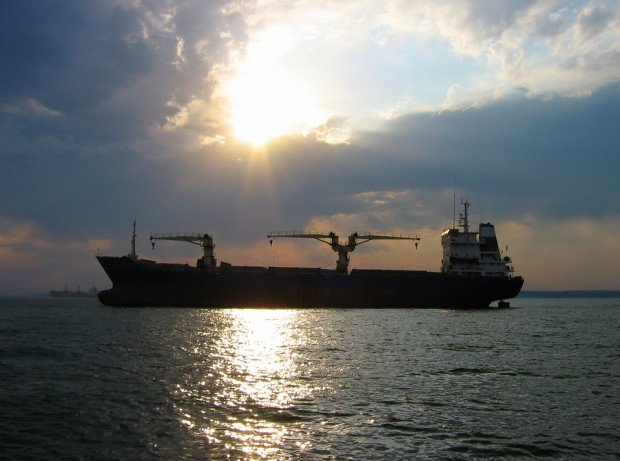
Still, many of the diverse challenges facing the marine marketplace are man-made in origin. For example, Willis reports that greater risk aggregates will challenge marine insurers as the Panama Canal project is completed sometime in 2014 or 2015. The New Panamax vessels will have a carrying capacity of 13,000 TEUs (twenty-foot equivalent units). Willis says these new container vessels are very well equipped, managed and maintained, but the broker warned that while the risk of a casualty may be lower, the severity will tend to be higher.

Another new issue confronting marine underwriters is the growing popularity of offshore wind farms.  The federal government is funding a $180 million initiative to support the development of wind energy installations off U.S. coasts. Already, both pleasure boaters and commercial shippers have informed the U.S. Coast Guard of their concerns about the impact of offshore wind installations on vessel routings. The American Institute of Marine Underwriters (AIMU) has produced an outstanding paper which identifies the special challenges posed to marine underwriters by the transport of utility-scale wind turbines.

Of course, longstanding risks have not diminished. Cargo theft costs this nation billions. In spite of initiatives by law enforcement and marine insurers, it remains a low-risk, high-reward proposition.  Through AIMU, U.S. marine insurers have been actively engaged with various law enforcement agencies for years on this issue.

AIMU has expressed its disappointment in the failure of the FBI to collect actionable data on cargo theft.  In a letter to the FBI, AIMU said the data now being compiled was woefully inadequate and incomplete and offered specific suggestions to improve information gathering from law enforcement agencies and private industry.

Also continuing to impact marine insurers is the issue of sanctions. The extent of sanctions clauses, which generally prohibit the coverage of international risks with potential exposure to foreign sanctions programs, varies widely from market to market around the world. In the past, AIMU sanctions clauses were very specific to the violation of any U.S. economic or trade sanctions. However, as sanctions regulations were adopted outside of the United States and sanctions clauses were promulgated by marine markets abroad, AIMU decided it was appropriate to adopt a new sanctions clause to be used for international risks with potential exposure to foreign sanctions programs.

The new working clause refers not only to U.S. sanctions, but also to other international sanctions programs, such as those in place in the European Union and the United Kingdom.  As with all policy forms and clauses developed by AIMU, the new sanctions clause is advisory in nature, with individual companies making their own decision as to its use.  This is an outstanding example of how collective action can generate practical solutions to the real-world problems marine insurers face.

Dealing with a rich variety of complex issues while operating in a highly competitive marketplace can be a daunting task. But U.S. marine underwriters are equipped to succeed in this uncertain economic environment because of the values that guide us as an industry:

  • A desire for knowledge that generates innovative research and an expansion of data-gathering that provides an information edge.
  • An engagement in legislative and regulatory affairs that gives voice to our concerns among public policymakers.
  • A dedication to continuing education that develops the best informed marine insurance professionals in the world.

Supported by these values, U.S. marine underwriters have the tools, skills, and knowledge to manage a variety of dynamic risks effectively and profitably in an increasingly uncertain world.

Contributor

Robert Gallagher

Robert Gallagher, International Marine Underwriters

Robert Gallagher is president of International Marine Underwriters, a member of the OneBeacon Insurance Group, and immediate past chairman of the American Institute of Marine Underwriters.

Reader Comments